
Sitting in a seminar on Franciacorta, May Matta-Aliah, DWS, Educational Brand Ambassador, asked the room, “Who knows Franciacorta?” Everyone raised their hands.
That was not particularly surprising in a room filled with wine trade and media. But outside of a wine-savvy crowd, Franciacorta is not as well-known as it should be. Perhaps part of that is because it is a small region. Champagne produces approximately 300 million bottles per year. Moët & Chandon alone produces around 23 million bottles. The entire region of Franciacorta produces approximately 20 million bottles.
But Franciacorta is also a little easier to enjoy, both in price and in taste. The wines are complex but fresh, offering the elegance and texture that come from traditional-method sparkling wine without feeling overly serious.
Despite what the name might suggest, Franciacorta does not mean “Little France.” The name dates back to the arrival of Cluniac monks in the 11th century, when the area was exempted from paying duties and the lands became known as “free courts,” eventually giving rise to the name Franciacorta.
Sparkling wine also has a long history here. In 1570, Brescian doctor Gerolamo Conforti wrote about sparkling wines from the region, although they were produced very differently from the wines we know today. According to May, the wines were put in barrels and slathered with fat and then put underwater.
Modern Franciacorta began in 1961 when Berlucchi produced the first bottle, originally called Pinot di Franciacorta. Franciacorta became a DOC in 1967. The Consorzio was founded in 1990 with 29 producers, and Franciacorta received DOCG status in 1995, with the first bottles bearing the DOCG seal released in 1997. The region’s first certified-organic wine was released in 2002, and today more than half of the vineyards are farmed organically. In 2017, the native grape Erbamat was added as a permitted variety, along with Chardonnay, Pinot Noir, and Pinot Bianco.
A Goldilocks Wine Region
Franciacorta is approximately 50,000 acres, but only 9,000 acres are planted within the DOCG. Some of the remaining land is used for still wine, while other areas are too high in altitude, too flat, or too close to towns to grow grapes for Franciacorta. It all sounds a little like Goldilocks, as the conditions have to be just right.
The region forms a natural amphitheater, hemmed in by Lake Iseo to the north, the Pre-Alps to the east, the Oglio River to the west, and Monte Orfano on the warmer southwestern edge. Glacial movement brought a rocky mix of soils to the area. These morainic soils are loose and well-draining, creating a patchwork of growing conditions within a relatively small area. Today the region has been subdivided into 134 zones, each with different soils and expressions.
Chardonnay dominates, accounting for approximately 79 percent of the plantings. Pinot Nero accounts for 18.1 percent and Pinot Bianco 2.6 percent. And then there is Erbamat, the native variety that currently accounts for just .3 percent.
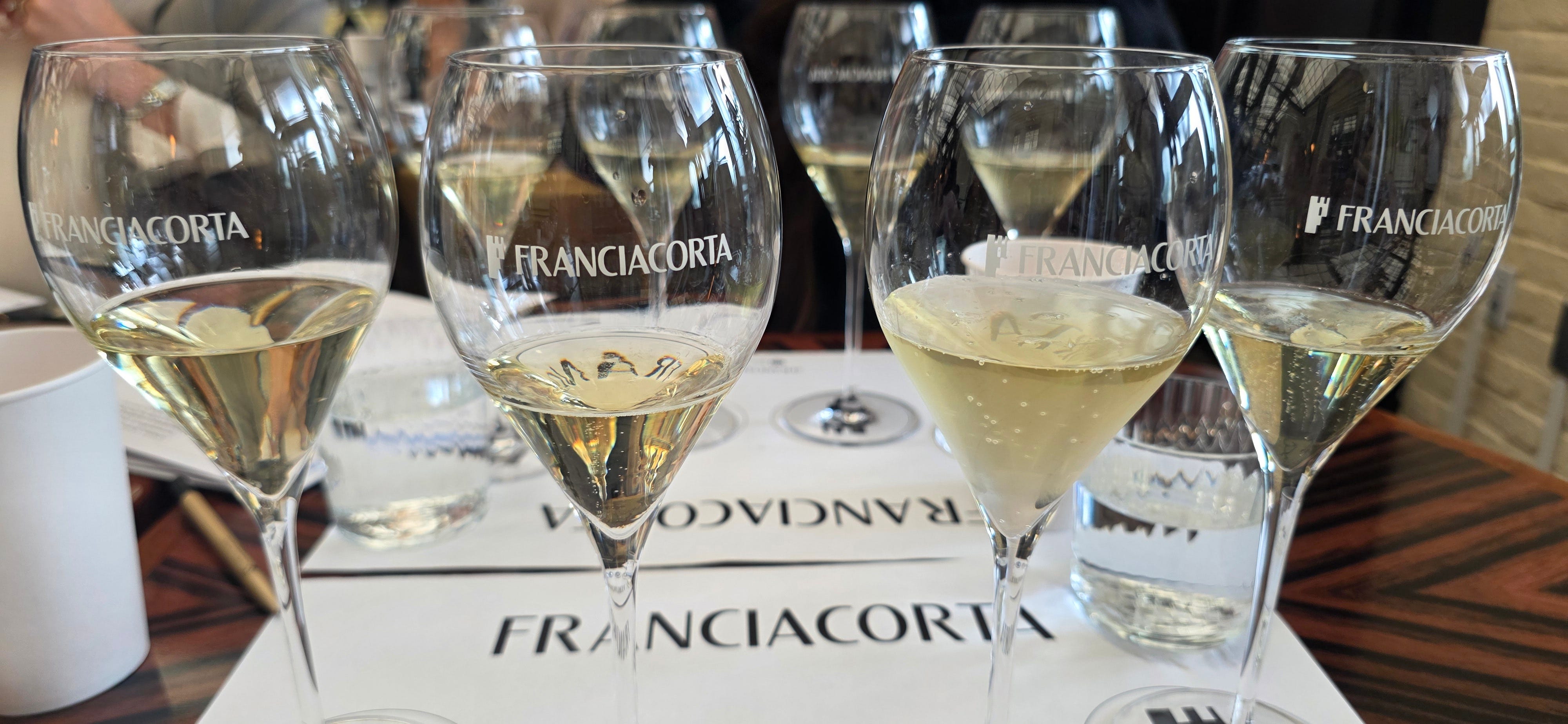
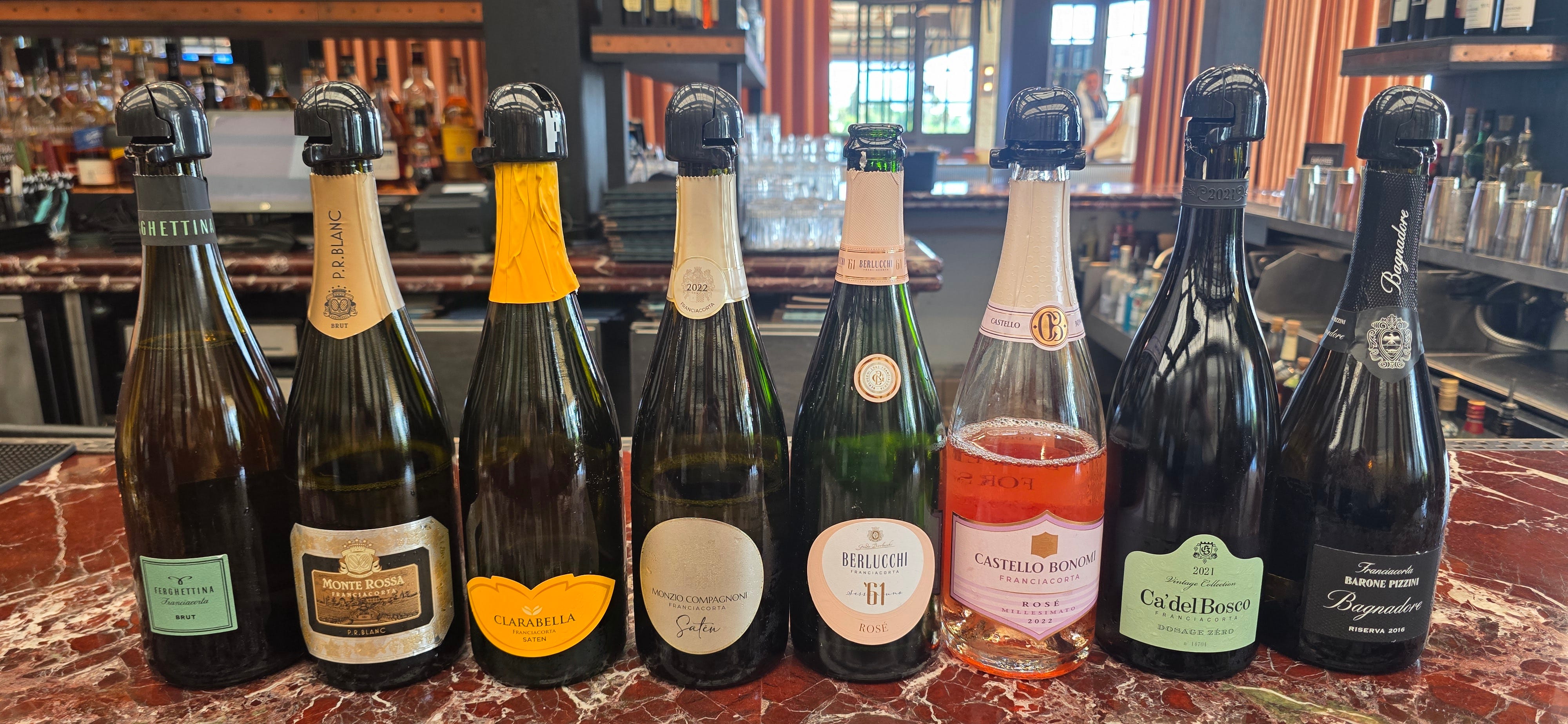
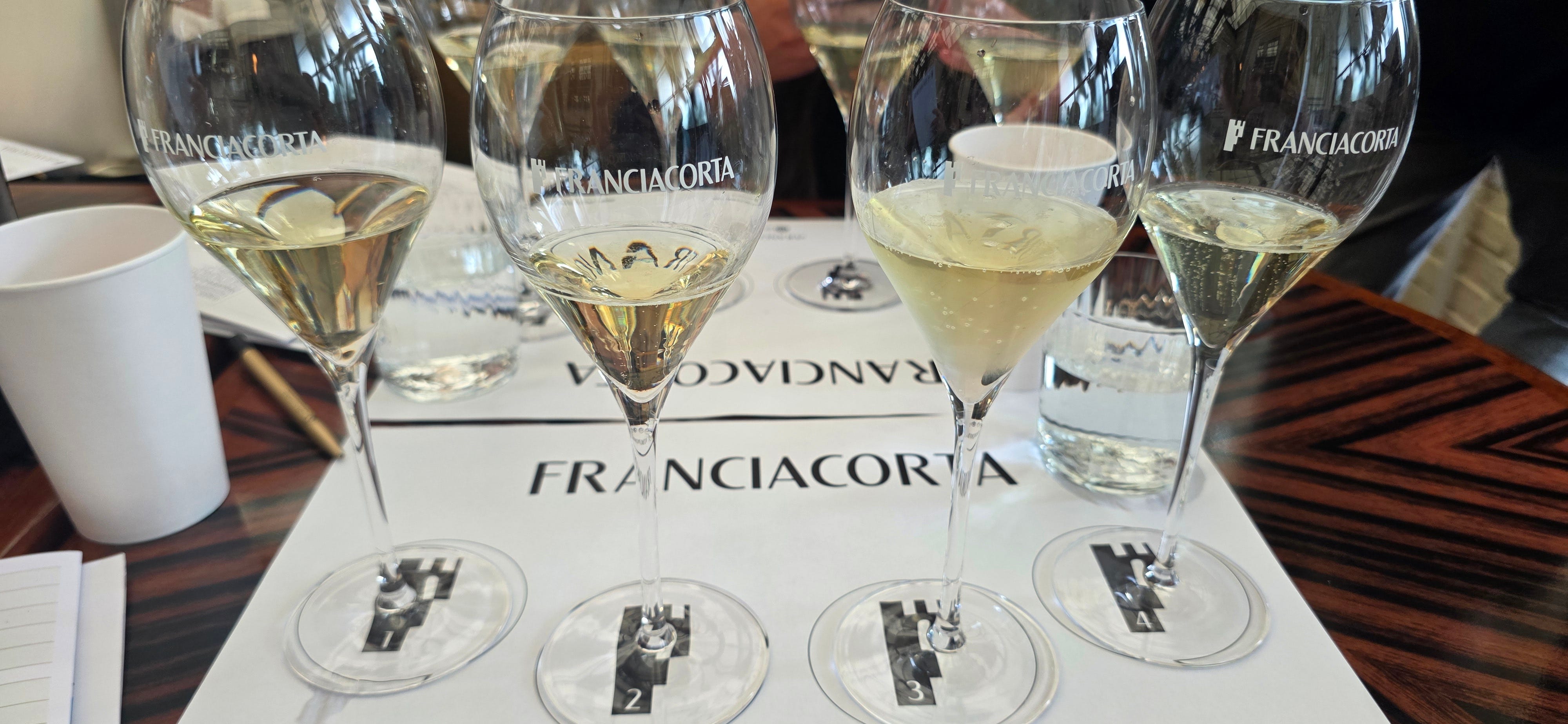
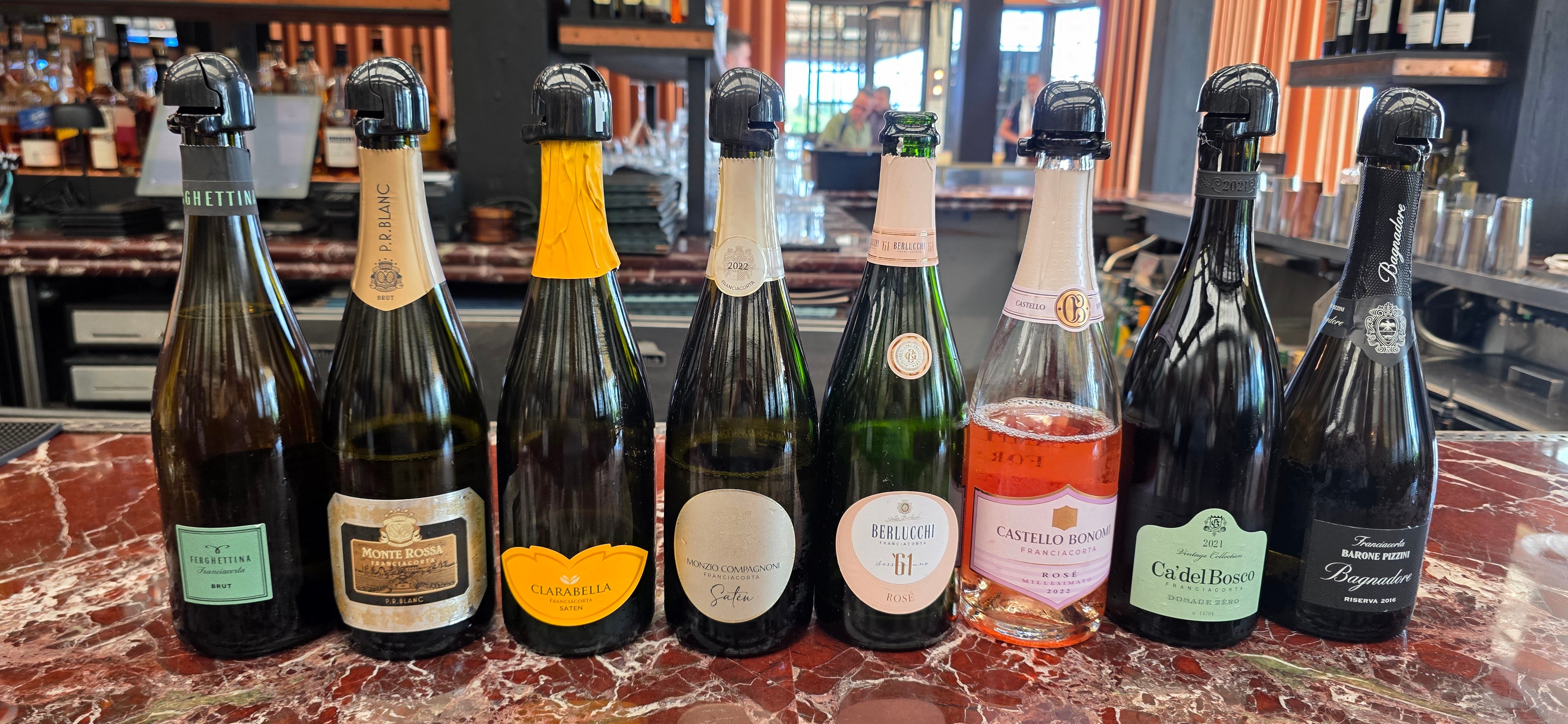
There are lots of strict rules to produce Franciacorta DOCG, from required trellising systems and minimum vine density to yields, soft pressing, aging, and more. There are also different requirements for the various styles of Franciacorta. Tasting through eight wines during the seminar offered a chance to explore the different styles in the glass.
Franciacorta Brut NV
Non-vintage Franciacorta requires a minimum of 18 months on the lees, and the wines must have between five and six atmospheres of pressure.
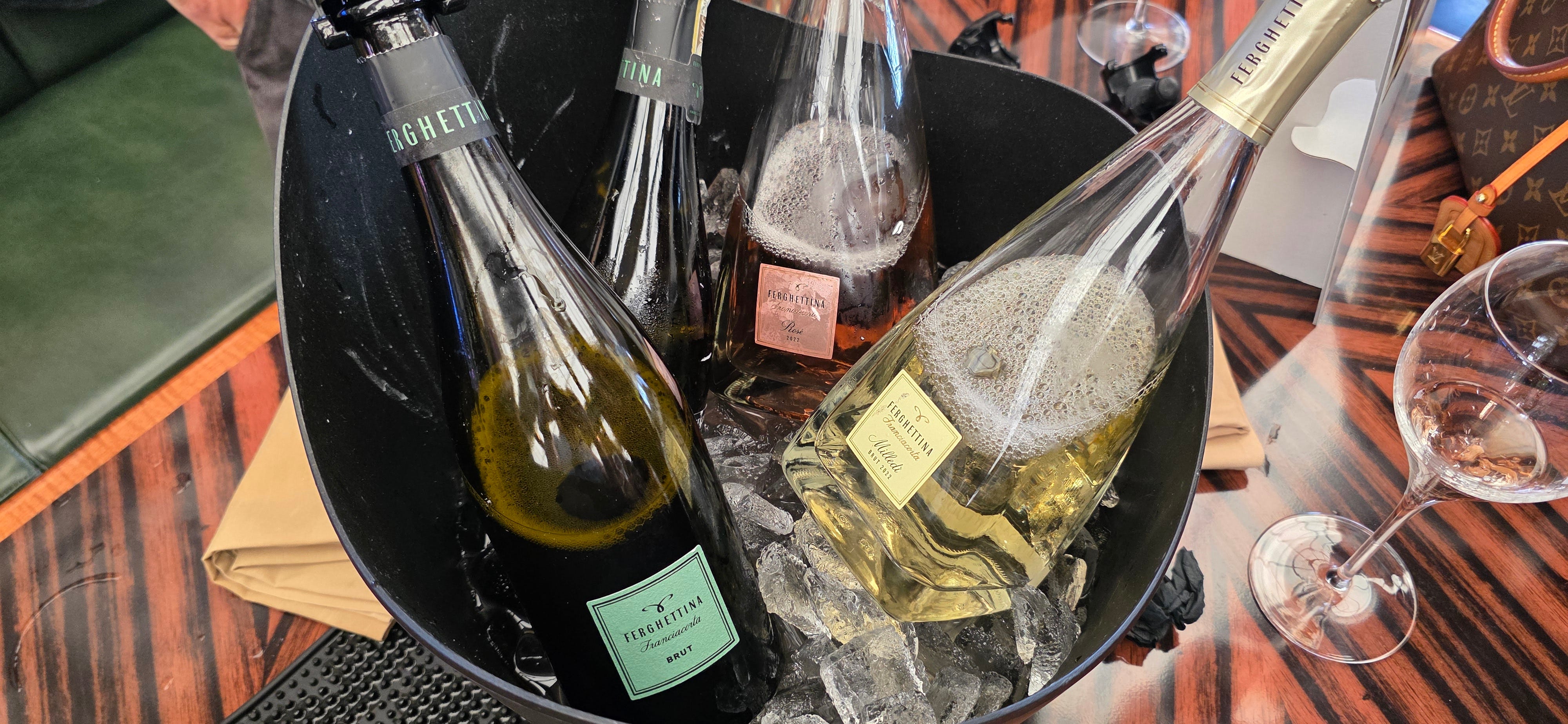
The Ferghettina Franciacorta Brut ($42), a blend of 85 percent Chardonnay and 15 percent Pinot Nero, was fermented in stainless steel and spent 24 months on the lees. With a dosage of 4 g/L, it had a pretty nose and coated the palate. It was elegant, fresh, and crisp while lightly textured. Ferghettina has been certified organic since 2017.
The Monte Rossa P.R. Blanc Franciacorta Brut ($50) showed another side of the category. Made from 100 percent Chardonnay, including 35 percent reserve wine, the wine was fermented in stainless steel and oak and aged for seven to eight months before bottling, followed by 24 months on the lees. With a dosage of 5.5 to 6 g/L, it was a little richer and rounder, with notes of lime skin and pith.
Satèn - The Soft Side of Franciacorta
Satèn is a style unique to Franciacorta. Chardonnay plays the starring role, with Pinot Bianco also permitted, and the wines are always Brut. With lower pressure than other Franciacorta wines (a required 5 atmospheres), Satèn has a softer, silkier texture.
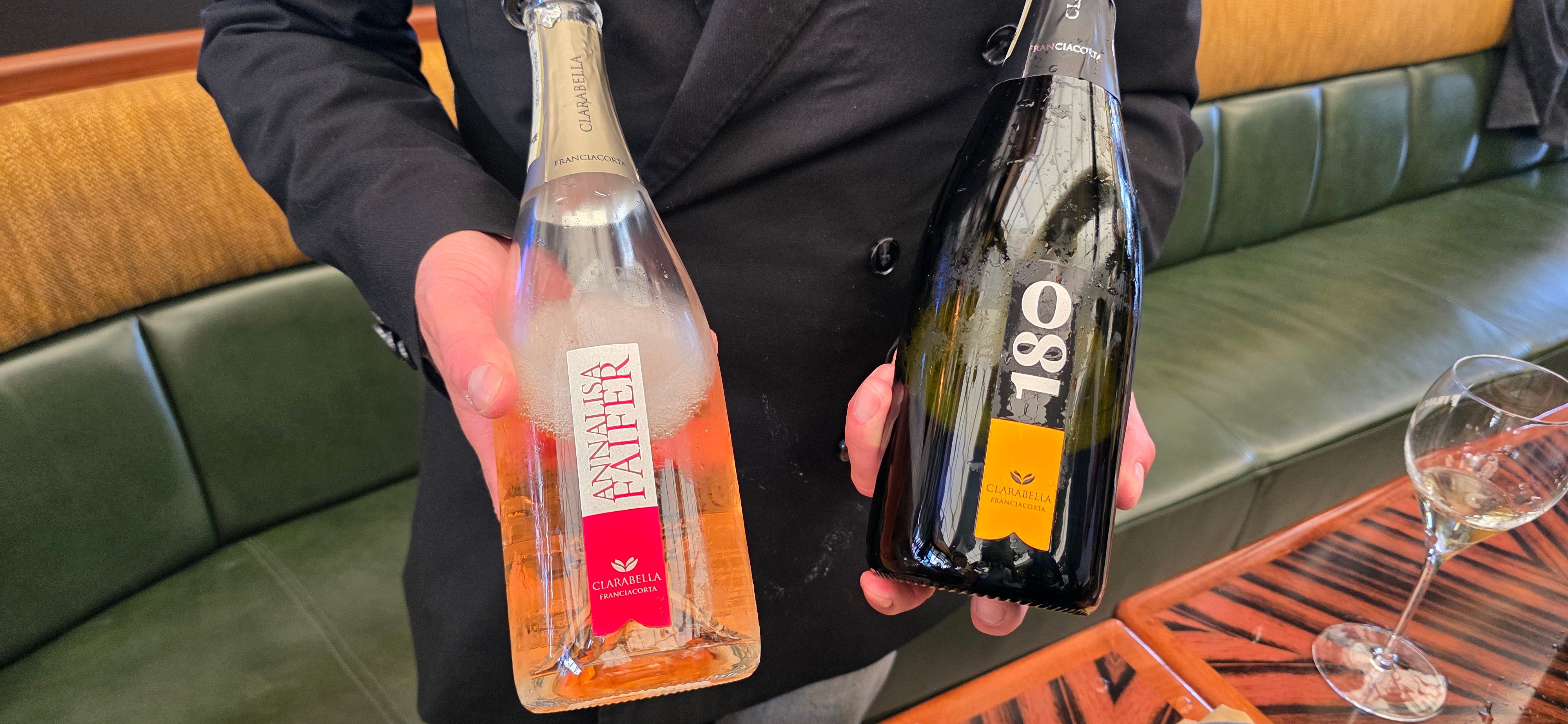
The Clarabella Franciacorta Satèn Brut ($34) is 100 percent Chardonnay, fermented and aged in stainless steel and then aged 24 to 30 months on the lees. With 4.5 g/L dosage, it was fresh with apple and white peach notes and lively acidity.
The Monzio Compagnoni Franciacorta Satèn Brut 2022 ($55) was also 100 percent Chardonnay, but a small portion of the base wine was aged in second- and third-fill oak barriques. After 36 months on the lees and with a dosage of 6 g/L, the wine offered ripe fruit and nutty notes.
Pink Franciacorta
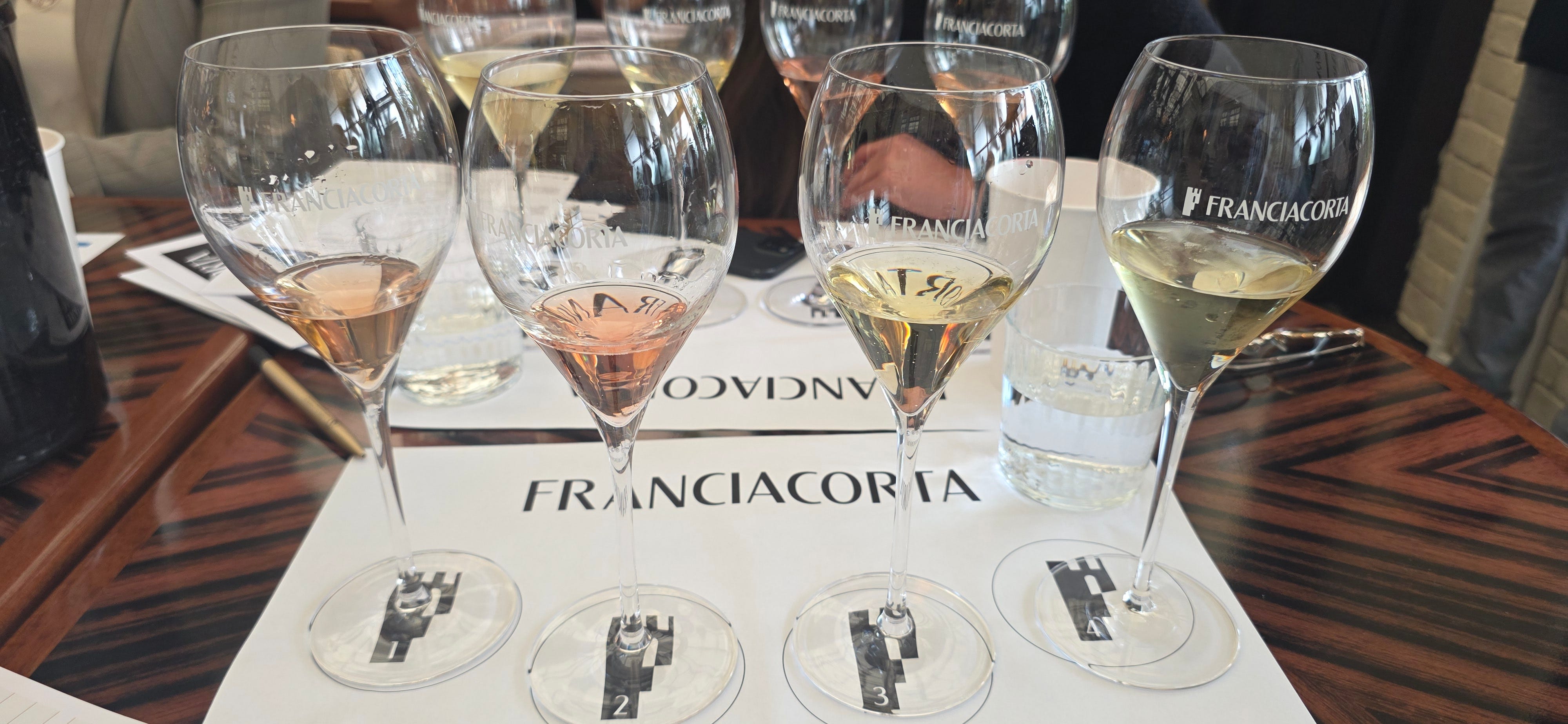
For Franciacorta Rosé, Pinot Nero must make up at least 35 percent of the blend. Chardonnay, Pinot Bianco, and even a small amount of Erbamat can also be used, and Rosé can be produced at different dosage levels.
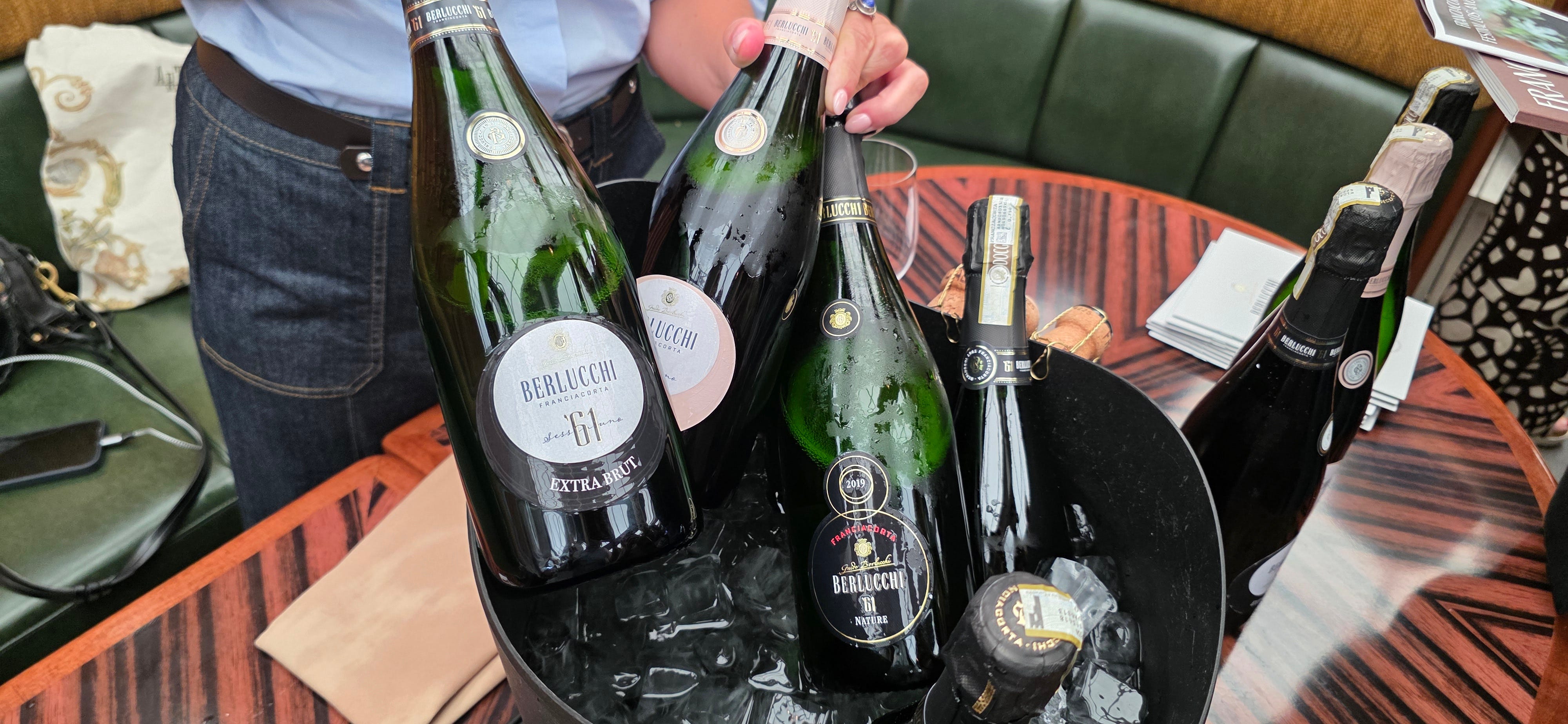
The Berlucchi ‘61 Franciacorta Rosé Brut ($53) is 70 percent Pinot Nero and 30 percent Chardonnay. Fermented in stainless steel and made with five percent reserve wine that had been aged for one year in stainless steel, the wine spent 24 months on the lees. With a 6.5 g/L dosage, it had a lovely roundness on the palate with notes of strawberry and rose followed by a mouthwatering finish.
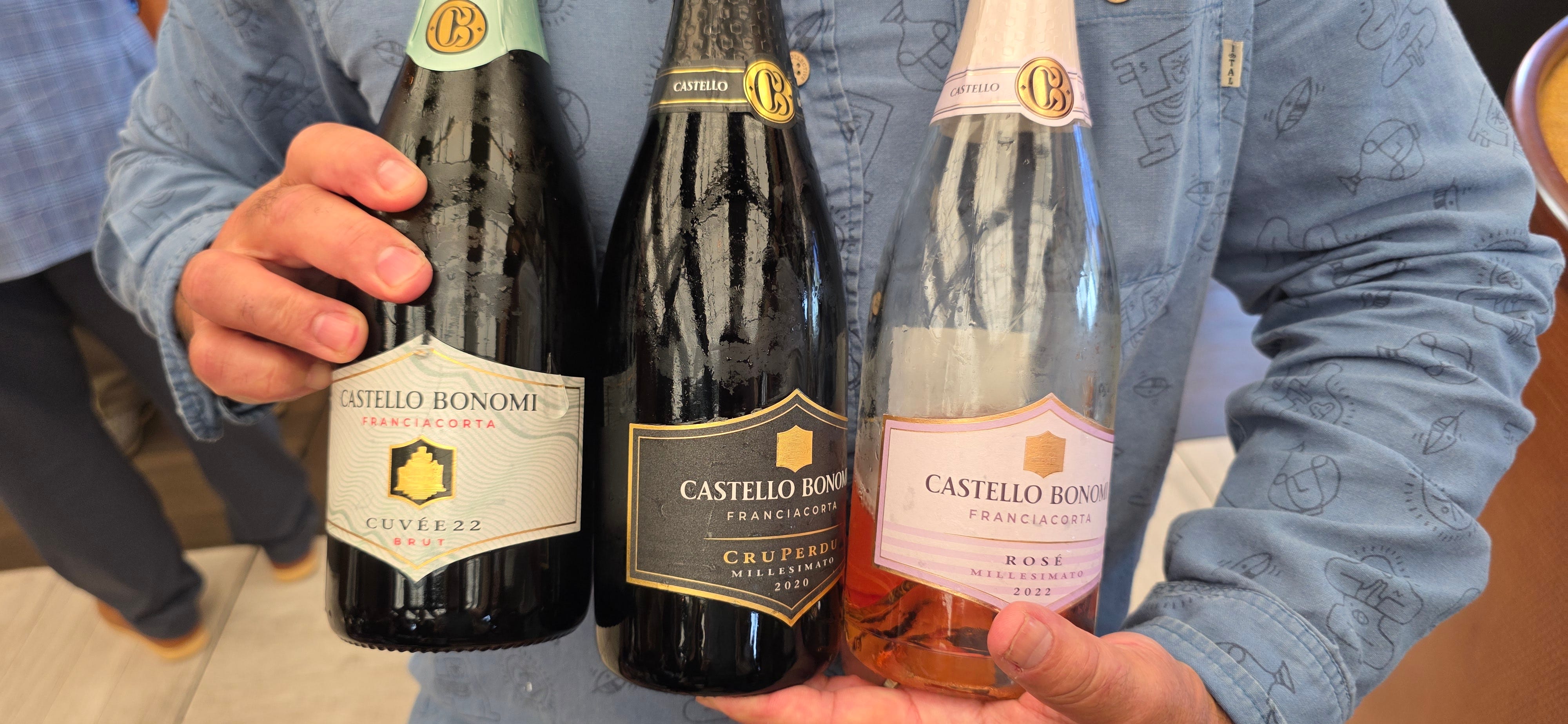
The Castello Bonomi Franciacorta Rosé Brut 2022 ($45) is 100 percent Pinot Nero. Fermented in stainless steel and aged for seven months before spending 30 months on the lees, it has a dosage of just 3 g/L. It was crisper, with notes of grapefruit and pomegranate.
Time Adds Another Dimension
Vintage Franciacorta must be made with at least 85 percent wine from the stated vintage and cannot be released until at least 37 months after the harvest. With more time on the lees, these wines can develop another level of complexity.
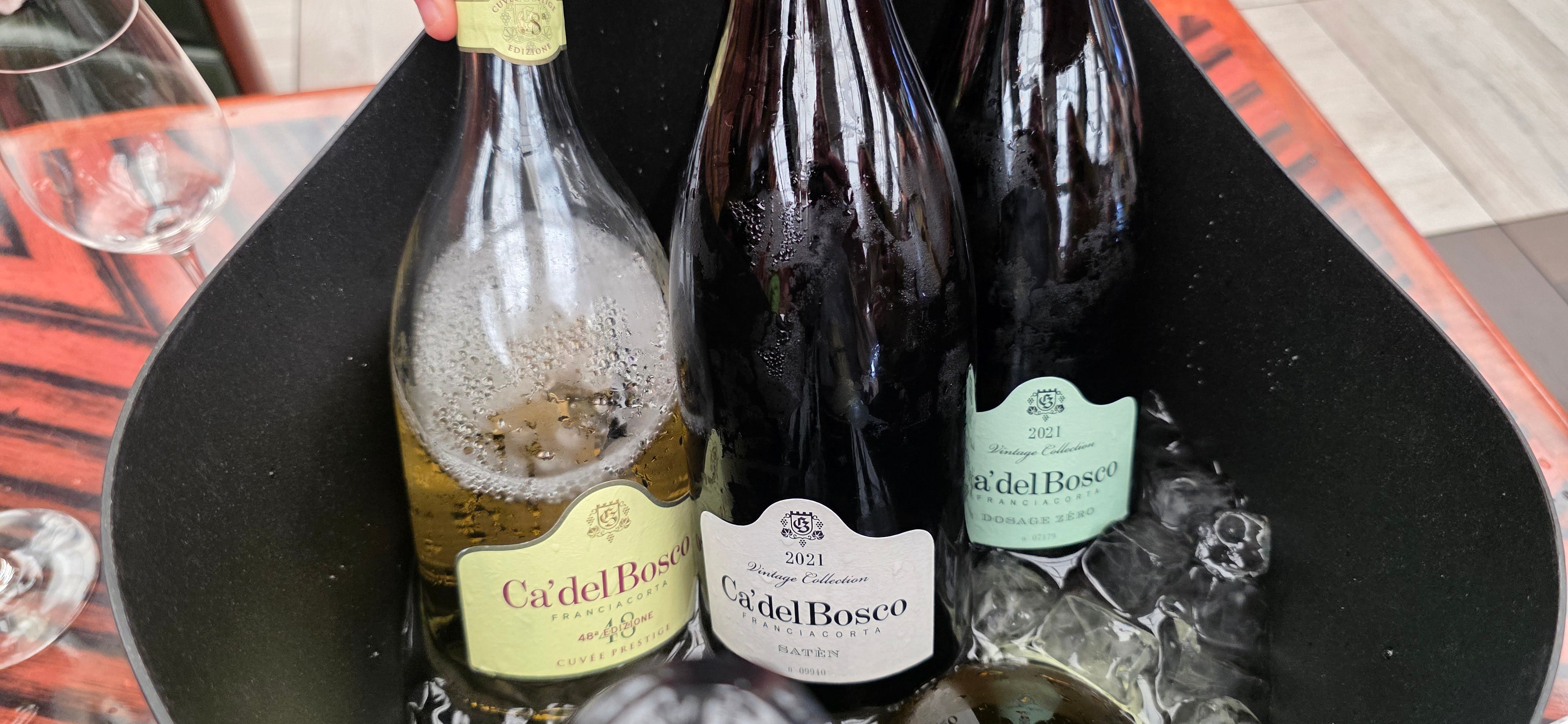
The Ca’ del Bosco Vintage Collection Franciacorta Zero Dosage 2021 ($60) is a blend of 81 percent Chardonnay, 16 percent Pinot Nero, and three percent Pinot Bianco. Fermented in small oak casks and aged for five months in barrel, the wine then spent 53 months on the lees. With zero dosage, it was precise and fresh, apple and hazelnut notes and a mineral-driving finish.
The Barone Pizzini Bagnadore Franciacorta Riserva Zero Dosage 2017 ($102) is a blend of 60 percent Chardonnay and 40 percent Pinot Nero. The wine was fermented in barrique and aged for eight months in a combination of barrique and stainless steel before spending 72 months on the lees. With less than 1 g/L residual sugar, the wine was fresh and crisp with an herbal, almost umami character. Additional note, Barone Pizzini was the first winery in Franciacorta to become certified organic.
More Than an Alternative
It is easy to talk about Franciacorta in relation to Champagne. Both are sparkling wines made using the traditional method, and Champagne provides a familiar point of reference. But after tasting through these eight wines, Franciacorta should be thought of as an alternative to Champagne.
From Non-Vintage to Satèn to Rosé to Vintage, Franciacorta has plenty of its own personality. So going back to when May Matta-Aliah asked the room, “Who knows Franciacorta?” Everyone should!
Lovely article, thanks for being there and sharing your experience:-)