
I still remember one of my first wine dinners. I was just beginning my career in the wine industry when I attended a Taittinger Champagne dinner hosted by Claude Taittinger. At the time, I was still learning about wine, and it was that evening when I experienced one of my first true “aha” food-and-wine pairing moments. It was Taittinger Rosé Champagne paired with seared foie gras.
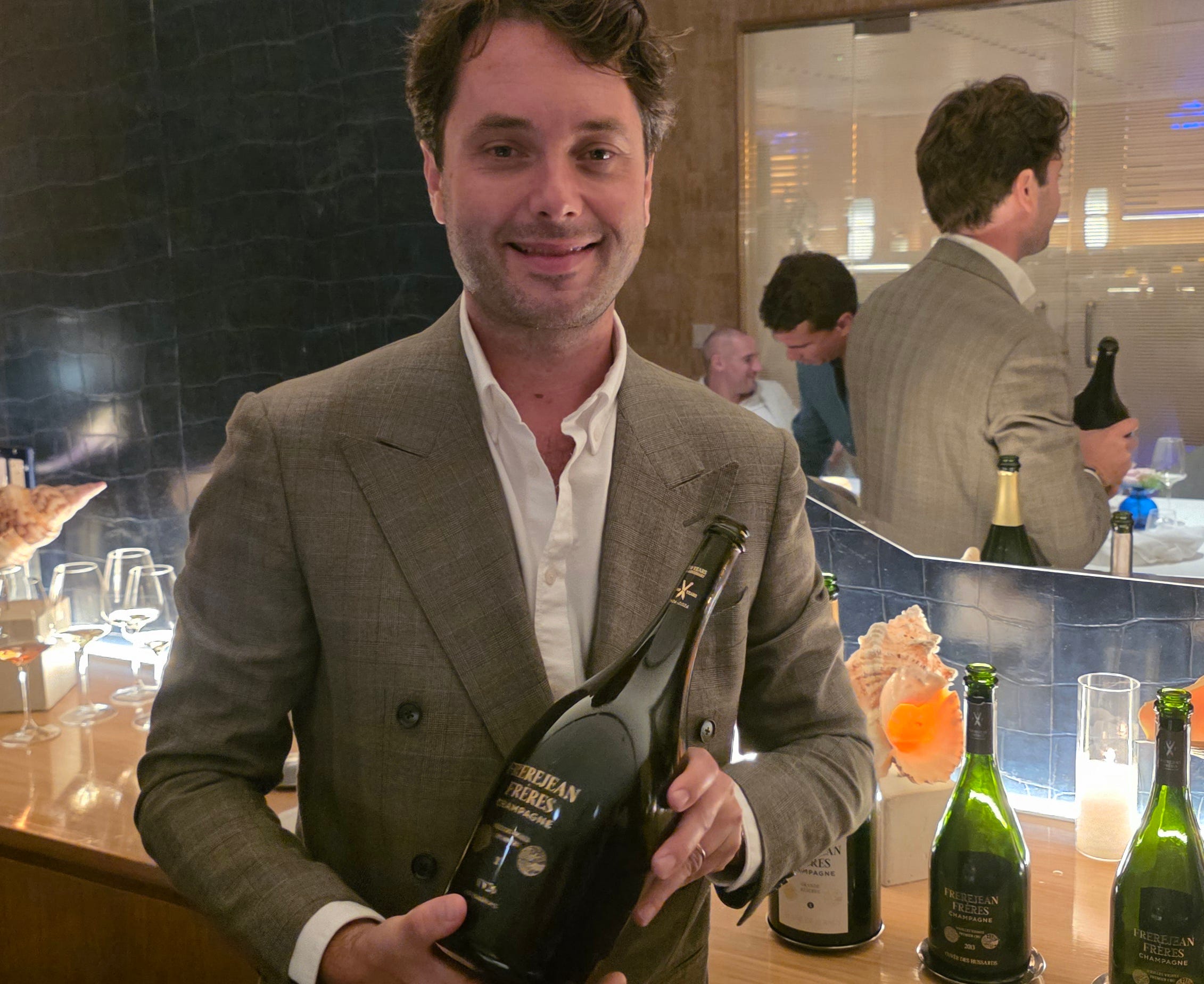
More than two decades later, I found myself at another Champagne dinner. This time I was sitting with Claude Taittinger’s nephew, Rodolphe Frerejean Taittinger, for the California introduction of Maison Frerejean Frères, the Champagne house Rodolphe founded with his brothers Guillaume and Richard in 2005.
There was something wonderfully circular about the evening as I was being introduced to a relatively young Champagne house whose story is rooted in one of the families connected to that very first experience.
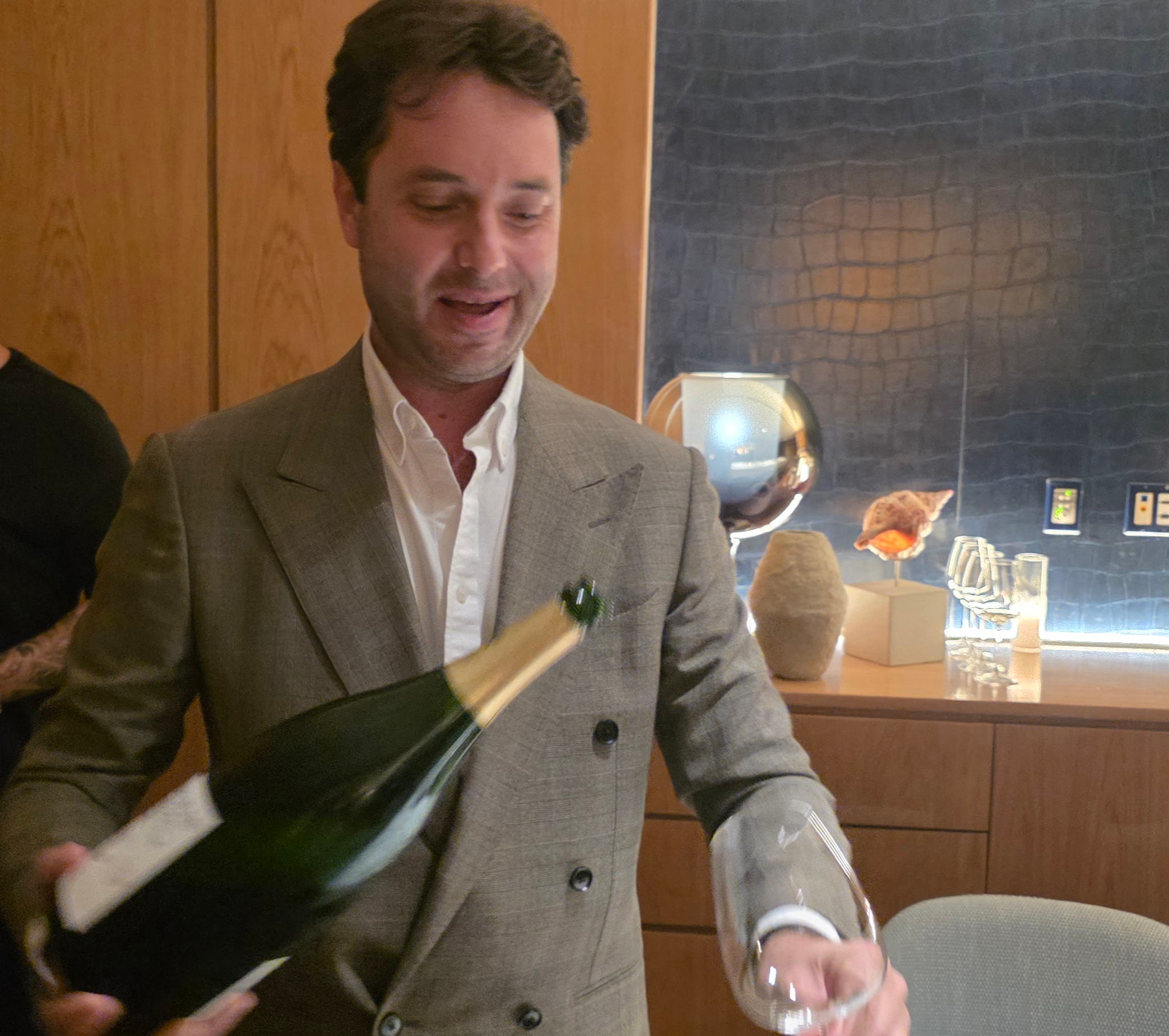
A New Generation in Champagne
A new Champagne house is something of a rarity, particularly one with such deep family roots in the region. Guillaume, Richard and Rodolphe Frerejean Taittinger grew up in Avize, in the Côte des Blancs, where Chardonnay is king. Their mother comes from the Taittinger family, giving the brothers a direct connection to generations of Champagne history.
But Frerejean Frères is not an extension of Taittinger. It is the brothers’ own story. Their house was founded in Avize in 2005, the same year Claude Taittinger retired and the extended Taittinger family made the decision to sell its holdings. From that period, the brothers had two hectares of Grand Cru vineyards with which they began building something of their own.
They went back to their roots in Avize and partnered with Didier Pierson, a fifth-generation winemaker from the village. What began as Champagne made primarily for family and friends slowly evolved into a Champagne house. Their first vintage was 2005, but they waited six years before releasing it in 2011.
That patience remains fundamental to Frerejean Frères today. These are not Champagnes intended to be rushed. Long aging is part of the house style, allowing the wines to develop depth and character while retaining the tension and minerality of the Côte des Blancs.
Rodolphe described Frerejean Frères as a “maison with a grower heart.” It is an important distinction. Frerejean Frères is not a grower Champagne house. The brothers own vineyards, but they also purchase fruit. Yet their approach reflects a grower’s sensibility: an intimate connection to the Côte des Blancs, a focus on individual vineyards and parcels, and an emphasis on allowing the character of the place to come through in the wines.
They operate as a maison, but think about Champagne like a grower.
Two Sides of a Family Story
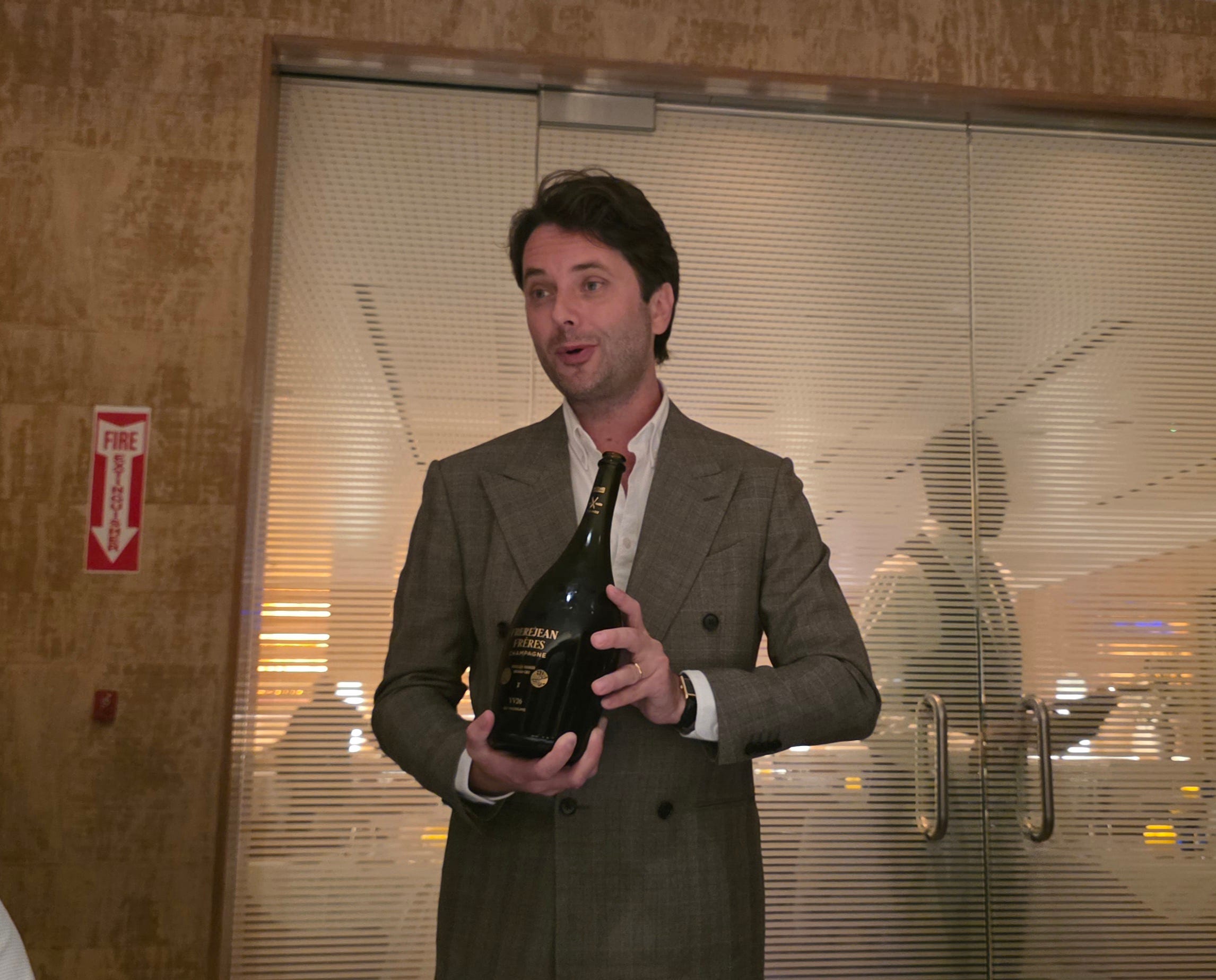
The Taittinger connection is only half of the brothers’ heritage. Their father’s family came from southern Burgundy and traces its history back to 1778. Frerejean’s ancestors manufactured cannons used during the Napoleonic era. That history is what inspired the name of the house’s prestige cuvée, Cuvée des Hussards, named for the Napoleonic cavalry, and the cannons are represented on the logo. The connection between Champagne and the Hussards goes beyond the family cannons; the cavalry is also associated with the tradition of sabering Champagne.
Chardonnay at the Center
If family history provides the foundation, place defines the wines. Avize sits at the heart of the Côte des Blancs, one of Champagne’s great Chardonnay territories. Chalk lies beneath the vineyards, and the brothers’ wines are built around the tension, minerality, and longevity Chardonnay can achieve there.
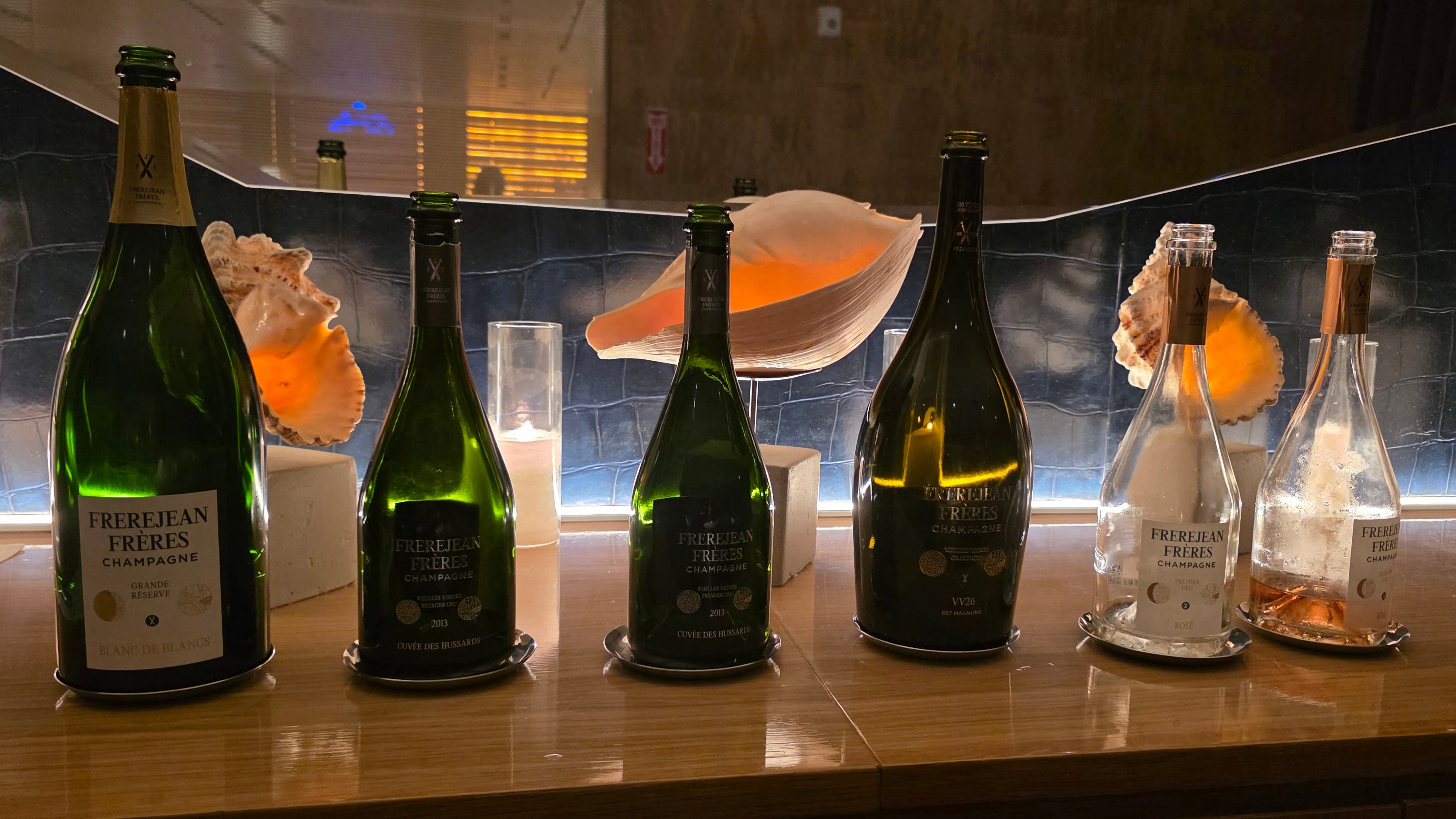
At dinner, we tasted through several expressions of the house, beginning with the Blanc de Blancs. Chardonnay is the language of the Côte des Blancs, and this wine offered a clear introduction to the Frerejean Frères style: precision balanced by time and texture. A beautiful golden color, the nose offers notes of citrus, white flowers, and lightly toasted almond. On the palate, the wine is lively and fresh with a silky texture.
Then came the 2013 Cuvée des Hussards, the house’s tête de cuvée, produced only in selected vintages. The 2013 is 90 percent Chardonnay with 10 percent Pinot Noir, the latter adding roundness to the naturally taut Chardonnay. More than a decade of aging has brought a beautiful nose of citrus and pears with layers of brioche. On the palate, the wine showed some maturity while preserving freshness, minerality, and tension.
The third wine was the VV26 - Grand Cru, sourced from their oldest Chardonnay vines. Planted in 1926 in the Grand Cru village of Cramant, the roots reach deep into the chalk, and the wine is aged in oak barrels for 12 months. This was a Champagne that made me, and everyone else at dinner, stop. Slightly oxidized, there were chalk, spice, and honey notes. The wine was rich without heaviness, and it had remarkable precision. It was distinctly Champagne, but it also had the vinous character of a serious white wine. It was the sort of bottle that makes you think about Champagne less as something for a toast and more as something that belongs at the table.
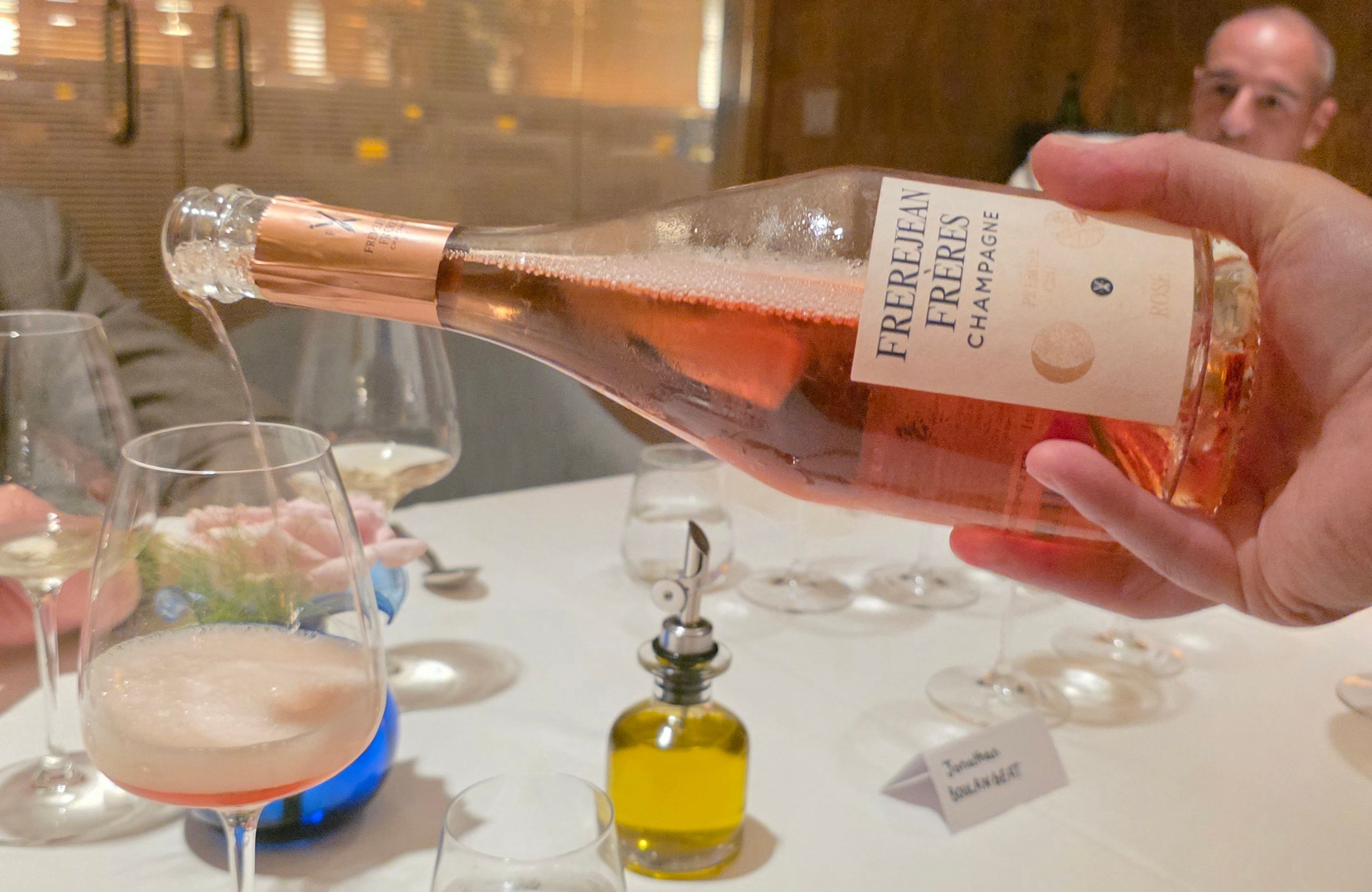
The final wine was the Rosé Premier Cru, a blend of 60% Chardonnay and 40% Pinot Noir, including 12% vinified red and aged in oak barrels. The Champagne was in the cellar for more than six years and was a beautiful salmon pink color. The nose offered aromas of red fruits, and on the palate, the wine was bright, fresh, and structured but also coated the palate like a silk scarf.
Across all four wines, there was a common thread: the wines have character.
Old Roots, New Chapter
Frerejean Frères may have been founded only in 2005, but calling it simply a “new” Champagne house does not quite capture the story. It is new and old at the same time. The brothers inherited Champagne history. They returned to Avize, started on a small scale, and built their own house. And now, Frerejean Frères is beginning another chapter as the Champagnes arrive in California for the first time.
The evening was an unexpected connection to my own history. At my first wine dinner with Claude Taittinger, I was at the beginning of my wine journey. And 25 years into my wine career, after numerous wine dinners, behind me, I sat with his nephew Rodolphe, tasting the wines he and his brothers have created to start their own legacy.